As the global solar energy market continues its unprecedented expansion, the focus for plant owners has shifted from mere installation to long-term Operational and Maintenance (O&M) excellence. One of the most critical factors affecting the performance of a photovoltaic (PV) system is “soiling”—the accumulation of dust, bird droppings, and environmental pollutants on the panel surface. Research indicates that soiling can reduce energy output by as much as 25% to 30% in high-dust environments. Consequently, the demand for automatic solar panel cleaning systems has surged. However, for most investors and O&M managers, the primary question remains: what is the automatic solar panel cleaning system price, and how does it translate into a better Return on Investment (ROI)?
In this article, we will explore the price ranges of automatic solar panel cleaning systems, the technology behind them, and how these systems can help solar power plants improve overall efficiency and reduce costs.
What is an Automatic Solar Panel Cleaning System?
An automatic solar panel cleaning system refers to a suite of mechanical tools and intelligent robotic solutions designed to remove contaminants from PV modules with minimal human intervention. Unlike traditional manual mopping, these systems integrate advanced algorithms, sensors, and specialized brush materials to ensure thorough cleaning without damaging the sensitive anti-reflective coatings of the glass.
These systems are categorized into three main types based on their level of automation:
Semi-Automatic/Handheld: Power-assisted brushes that require an operator but significantly reduce physical labor.
Remote-Controlled Robots: Tracked or suspended machines operated via a controller, ideal for hazardous or large terrains.
Fully Autonomous Robots: Self-navigating units that operate on a schedule, often featuring “waterless” technology for arid regions.
By leveraging these technologies, plant owners can achieve a level of consistency and safety that manual labor simply cannot match.
Core Features: Why Automation is the Future of PV Maintenance
Understanding the solar panel cleaning machine price requires an appreciation of the features that drive those costs. Modern systems are not just brushes; they are sophisticated maintenance assets.
Unparalleled Cleaning Efficiency
Automation allows for frequency. While manual cleaning might happen once a quarter due to labor costs, an automatic solar panel cleaning robot can clean panels weekly or even daily. This constant state of cleanliness ensures that the panels are always operating at their peak STC (Standard Test Condition) ratings.
Water Conservation and “Dry Cleaning” Capabilities
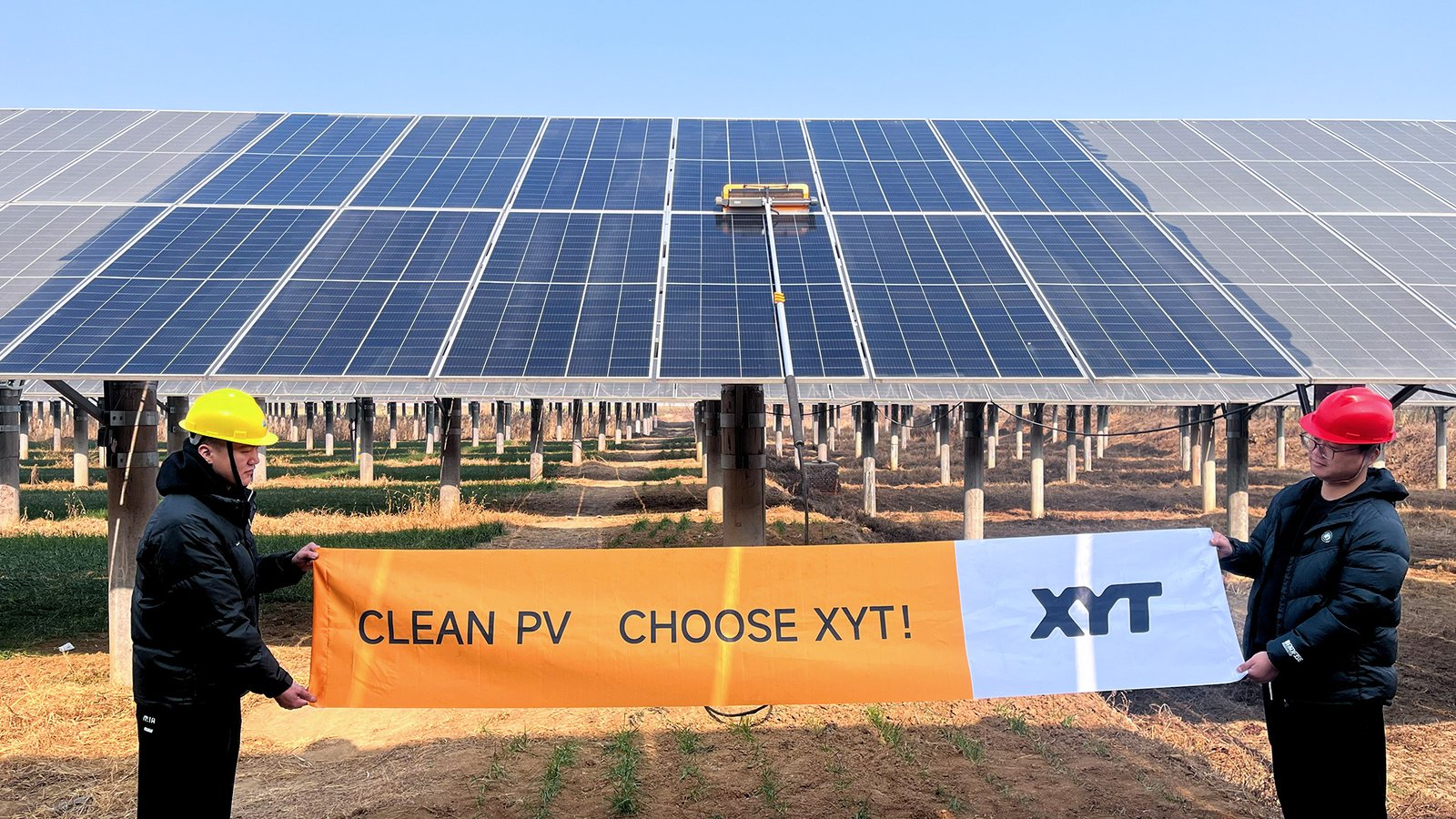
In many regions where solar energy thrives, such as the Middle East or Northwestern China, water is a precious and expensive resource. Advanced robots like the XYT X7 are designed for waterless cleaning, using specialized airflow and soft brushes to remove dust without a single drop of water. This not only protects the environment but also removes the logistical cost of transporting water to remote sites.
Significant Reduction in Long-term Labor Costs
While the initial solar cleaning robot price is higher than a set of mops, the “Cost per Clean” drops dramatically over time. Automated systems eliminate the need for large teams, insurance for high-altitude workers, and the human error that leads to micro-cracks in panels caused by workers stepping on modules.
Comparative Analysis: Manual vs. Automated Cleaning Systems
When evaluating the solar panel cleaning system price, it is helpful to view the “Total Cost of Ownership” (TCO) over a 5-to-10-year period.
Cleaning Method Initial Investment Operational Speed Labor Requirement Long-term ROI
Manual Cleaning Very Low Slow High (Continuous) Low (High OpEx)
Semi-Auto (X3/X4) Moderate Medium-Fast Low (1 operator) High
Robotic (X7/X8) High Very Fast Minimal/None Maximum (Lowest OpEx)
As shown, while manual cleaning has a low barrier to entry, it becomes a financial drain as the plant scales. Automated systems represent a shift from Operating Expenditure (OpEx) to Capital Expenditure (CapEx), which is generally more favorable for large-scale energy investors.
Detailed Price Breakdown: From X2 to X8 Series
The automatic solar panel cleaning system price varies based on the mechanical complexity, battery capacity, and navigation technology. Below is the 2026 market pricing guide for the XYT product lineup:
- X2 Manual Water Spray Kit
The X2 is the entry point for residential users and small-scale installers. It features a telescopic pole (ranging from 3.6m to 11.4m) and an integrated water supply. It is the perfect balance for those who want professional results without the robotic price tag. - X3 Single-Head Roller Brush
Designed for small-to-medium distributed projects, the X3 offers motorized brushing. This reduces the physical strain on the operator and ensures a more uniform cleaning pressure across the panel surface. - X4 Double-Head Handheld Machine
The X4 is a favorite among professional O&M service providers. With dual rotating heads, it doubles the cleaning width, making it highly efficient for factory rooftops and medium-sized commercial arrays. - X5/X6 Suspended & Roller Systems
These systems are designed for specific tilt angles and mounting structures. They provide a more stabilized cleaning path and are ideal for mid-sized plants where ground-based robots might struggle with terrain. - X7 Remote-Controlled Crawler Robot
The X7 represents the transition into heavy-duty utility-scale O&M. Its tracked design allows it to navigate over gaps between panels and handle inclines. It is specifically optimized for waterless cleaning in desert environments. - X8 Fully Autonomous Cleaning Robot
The X8 is the flagship solution for large-scale ground-mounted stations. It features intelligent path planning, obstacle avoidance, and autonomous docking. While the solar panel cleaning robot price for the X8 is the highest, it offers the lowest cost-per-watt of cleaning over the life of the plant.
XYT’s Specialized Robotic Solutions
At XYT, we don’t just sell machines; we provide “Intelligent Cleaning Ecosystems.” Our 8,500-square-meter facility ensures that every robot is built to ISO9001 standards and carries CE certification.
The X7 Pro Crawler: This model has become an industry benchmark for hilly and complex terrains. In real-world use cases, the X7 has demonstrated the ability to maintain efficiency in mountainous power stations where traditional vehicles cannot reach. Its vacuum-track technology ensures it stays gripped to the panels even at steep angles.
The X8 Flagship: For utility-scale owners, the X8 is a “set and forget” solution. It integrates with the plant’s SCADA system to trigger cleaning cycles based on real-time weather data and soiling sensors. This level of integration is why nearly 10,000 power plants globally trust XYT technology.
How to Choose the Right Solar Panel Cleaning System?
Choosing the right system requires balancing your solar cleaning robot price expectations with your operational needs:
For Utility-Scale Ground Plants: Direct your investment toward the X7 or X8. The ability to clean thousands of panels daily with zero water usage and minimal labor provides the fastest path to ROI in arid regions.
For Commercial & Industrial (C&I) Rooftops: The X4 or X5 is the “sweet spot.” These machines are portable enough to be moved between different roof sections but powerful enough to handle several megawatts of capacity.
For Residential and Small Installers: The X2 or X3 ensures your customers’ systems stay efficient without requiring a massive capital outlay.
How Automation Increases Power Generation
The true value of an automatic solar panel cleaning system isn’t just in the labor saved; it’s in the electricity gained. XYT equipment has been proven to increase light transmittance and boost power generation by an average of 15% or more.
Consider a 10MW plant. A 15% increase in efficiency can translate to hundreds of thousands of dollars in additional revenue annually. When viewed through this lens, even a $50,000 solar panel cleaning robot price for an X8 unit pays for itself within the first year of operation.
Frequently Asked Questions (FAQ)
Is the maintenance of these robots difficult?
No. XYT robots are designed with a modular philosophy. Brushes and tracks are easy to replace, and the systems require only basic periodic inspections to ensure peak performance.
Can these systems handle extreme weather?
Yes. Our robots are tested for performance in high-altitude, high-heat (desert), and high-humidity environments. They are built with industrial-grade materials to withstand the rigors of outdoor exposure.
How does the X2 simplify operations for small owners?
The X2 eliminates the need for ladders or scaffolding. Its lightweight telescopic design allows an operator to clean panels safely from the ground or a stable platform, significantly reducing the risk of accidents.
Investment in automated cleaning is an investment in the future of your energy assets. By choosing XYT, you are partnering with a leader in green energy technology dedicated to reducing the global carbon footprint through intelligent innovation.
Are you ready to optimize your solar plant’s performance? Contact our sales team today for a customized quote and professional site analysis.