
Dirty solar panels can quietly reduce energy production, yet cleaning them the wrong way may create a more expensive problem than the dirt itself. The International Energy Agency Photovoltaic Power Systems Programme estimates that soiling causes average global energy losses of roughly 4% to 7%, although the actual impact varies sharply by climate, panel angle, rainfall, pollution, and site conditions.
That does not mean every dusty panel needs immediate scrubbing. A thin, even layer of dust may have little measurable effect at one property, while bird droppings, sticky pollen, agricultural dust, or coastal salt can create persistent losses at another. Before reaching for a brush, you need to confirm that cleaning is necessary, check the module manufacturer’s instructions, and decide whether you can complete the work without climbing onto an unsafe roof.
The best cleaning method therefore starts with diagnosis rather than water. You should compare production data, inspect the array from a safe position, understand the contamination, and choose tools that match the panel manufacturer’s maintenance rules. This approach protects the glass, electrical components, warranty conditions, and the people doing the work.
What Is the Best Way to Clean Your Solar Panels?
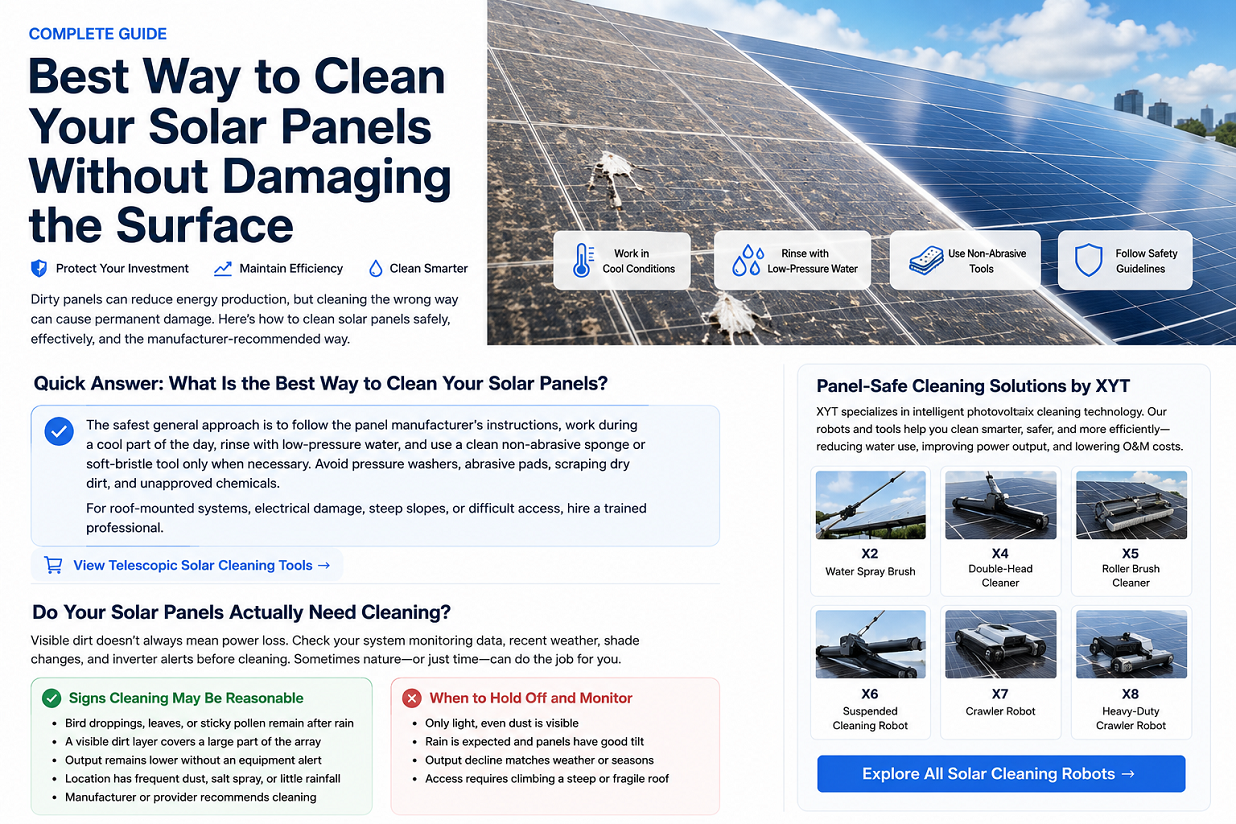
The safest general method is to follow the module manufacturer’s instructions, clean during a cool part of the day, rinse with low-pressure water, and use a clean non-abrasive sponge or approved soft-bristle tool only when water alone cannot remove the deposit.
Canadian Solar instructs owners to wash soiled modules with water and a non-abrasive cleaning implement during a cool part of the day. It also warns against scraping or rubbing dry dirt because grit may create micro-scratches. Tesla allows owners to rinse panels with a garden hose or use soapy water with a non-abrasive sponge. These differences show why no internet guide should replace the instructions for your exact panel brand and model.
Avoid pressure washers, metal scrapers, abrasive pads, stiff brushes, unapproved chemicals, and sudden contact between cold water and very hot glass. Keep both feet on the ground whenever possible. Roof-mounted systems, steep slopes, electrical damage, cracked modules, loose wiring, or difficult access call for a trained professional.
Do Your Solar Panels Actually Need Cleaning?
Visible dirt does not automatically prove that soiling has caused a meaningful loss. Solar output changes with cloud cover, temperature, seasonal sun angles, shading, inverter behavior, grid curtailment, and equipment faults. Cleaning before checking these factors can waste water and money while exposing someone to unnecessary access risk.
Start with the system monitoring platform. Compare current production with similar clear-weather days from the same season. Look for inverter alerts, newly grown vegetation, construction activity, damaged components, or shading from nearby objects. A sharp drop across the entire array may point to an electrical or system issue rather than dirty glass.
Signs That Cleaning May Be Reasonable
- Bird droppings, leaves, sap, or sticky organic deposits remain after rainfall.
- A visible dirt layer covers a substantial part of the array.
- Weather-normalized output stays below comparable historical periods.
- The site receives frequent dust, agricultural residue, industrial pollution, or salt spray.
- Low panel tilt or limited rainfall prevents natural rinsing.
- The module manufacturer or maintenance provider recommends inspection or cleaning.
When Monitoring Is the Smarter Choice
You may not need to clean when the array only has a light, even dust layer, production remains normal, or rain is expected soon. Monitoring is also preferable when reaching the modules would require a ladder, walking on fragile roofing, or working close to exposed electrical components.
| Observed Condition | Recommended Response | Reason |
|---|---|---|
| Light dust with normal production | Continue monitoring | Avoid unnecessary cleaning and access risk |
| Small reachable bird-dropping deposit | Use a manufacturer-approved spot-cleaning method | Remove concentrated blockage without treating the full array |
| Persistent widespread soiling and lower normalized output | Plan a compliant full cleaning | Cleaning may recover energy after other causes are excluded |
| Cracked glass, loose wiring, inverter alerts, or a steep roof | Contact a qualified professional | The situation involves electrical, equipment, or fall hazards |
Solar Panel Cleaning Mistakes That Can Cause Damage
Most cleaning problems begin when someone treats a photovoltaic module like an ordinary window. Solar modules contain sealed electrical components, surface treatments, frames, junction boxes, cables, and connectors. A method that works on patio glass may conflict with the panel manufacturer’s limits.
Avoid High-Pressure Washing
A pressure washer can force water toward seals, connectors, junction boxes, roof penetrations, or already damaged areas. It may also apply concentrated mechanical force to the glass and frame. Use a low-pressure water source only when the manufacturer permits it, and never direct water into electrical enclosures or damaged components.
Never Scrape Dry Dirt
Dry dust can contain sand, mineral particles, and other hard material. Dragging that grit across the glass with a scraper, cloth, or brush can create fine surface marks. Canadian Solar specifically warns against scraping or rubbing dry dirt. Pre-rinse loose particles and keep the working area wet before making gentle contact.
Put Away Abrasive Pads and Hard Brushes
Metal blades, kitchen scouring pads, stiff-bristle brushes, dirty cloths, and worn cleaning heads can concentrate force or trap abrasive particles. A clean, soft tool distributes contact more evenly, but it still needs approval for the specific module surface.
Do Not Assume Household Cleaners Are Safe
Glass cleaners, bleach, solvents, strong detergents, acidic solutions, and homemade mixtures may leave residue or conflict with module maintenance instructions. Even dish soap is not a universal recommendation. Tesla permits soapy water for its systems, while other manufacturers may specify water only or restrict detergent types. Check the manual rather than copying advice written for another product.
Do Not Shock Hot Glass With Cold Water
Modules can become extremely hot under direct sunlight. Cleaning during early morning, late afternoon, or another cool period makes the surface easier to handle and reduces rapid temperature differences. Follow any temperature limits stated in the module manual.
Solar Panel Cleaning Tools You May Need
A safe tool list should remain conditional because panel constructions and coatings differ. For an accessible residential array, the basic setup may include a garden hose or another low-pressure water source, a clean non-abrasive sponge, an approved soft-bristle brush, and a telescopic pole that keeps the operator on the ground.
Where mineral spotting is a recurring issue, deionized or purified water can reduce the dissolved minerals left behind when droplets evaporate. It is an option rather than a universal requirement. Ordinary tap water may be acceptable when the manufacturer allows it, especially when the panels receive a complete final rinse and the water does not dry rapidly on hot glass.
A total dissolved solids meter can help operators understand water quality, but a low reading does not prove that a cleaning method is safe for every module. The owner’s manual, warranty terms, tool condition, brush material, water pressure, and operator technique still control the decision.
Inspect every cleaning head before use. A soft brush becomes abrasive when its bristles contain trapped sand. Replace damaged pads, rinse tools thoroughly, and store them away from soil, metal filings, construction debris, and chemicals.
How to Clean Solar Panels Step by Step
-
Read the Module Manual and Warranty Terms
Identify the approved water source, cleaning tools, detergent rules, pressure limits, shutdown procedure, and temperature restrictions. Confirm the exact panel model because instructions from another product line may not apply to your system.
-
Inspect the Array From a Safe Position
Look for cracked glass, exposed wiring, loose connectors, damaged frames, animal nests, roof defects, unstable mounting, or unusual discoloration. Do not touch damaged electrical components. Canadian Solar warns that contact with a module whose glass or backsheet has broken can create an electric-shock risk.
-
Choose a Cool, Calm Time
Work when the panels are cool and clearly visible. Avoid strong wind, storms, ice, wet roofing, and other conditions that make equipment difficult to control. Early morning may suit some sites, but heavy dew can make surrounding surfaces slippery.
-
Follow the Approved System Procedure
Do not rely on a universal shutdown instruction. Inverter designs, disconnects, rapid-shutdown equipment, battery systems, and commercial plant procedures differ. Follow the installer’s documentation or ask the system provider how maintenance should proceed.
-
Rinse Away Loose Dust
Use low-pressure water to move loose particles from the upper portion of the panel toward the lower edge. Do not spray directly into junction boxes, connectors, cable entries, damaged seals, roof openings, or the underside of modules unless the manufacturer specifically allows it.
-
Loosen Remaining Dirt Gently
Use a clean non-abrasive sponge or approved soft-bristle tool. Apply light, even pressure and keep the contact area wet. Do not lean heavily on the module, stand on it, or use the cleaning pole as a support.
-
Soften Stubborn Deposits
Hold approved water over bird droppings, pollen film, sap, or compacted residue long enough to soften it. Repeat gentle passes instead of increasing force. Avoid blades, aggressive chemicals, and concentrated spot pressure.
-
Complete a Final Rinse
Remove loosened material and any approved cleaning solution. Where hard water creates persistent spotting, use purified water for the final rinse when compatible with the module instructions and the cleaning equipment.
-
Inspect the Result Without Touching Electrical Parts
Check for missed deposits, pooled water, damaged seals, loose components, and tool marks. Photograph the completed work and record the date, weather, equipment, water source, and products used.
-
Review Production Under Comparable Conditions
Wait for similar weather before judging the outcome. Compare weather-normalized output rather than using a single reading immediately after cleaning. A temporary increase may come from cooler temperatures or stronger irradiance rather than dirt removal alone.
How to Handle Bird Droppings, Pollen, Ash, and Salt
Bird Droppings and Sticky Organic Deposits
Bird droppings create concentrated shading and can harden onto the surface. Soak the deposit before making contact. If the affected area is reachable from the ground, gentle spot cleaning may be more sensible than cleaning the entire array. Recurring nests, damaged bird mesh, or chewed wiring require professional pest and electrical attention.
Heavy Pollen
Dry pollen may look harmless, but water can turn a heavy layer into a sticky film. Start with a thorough rinse and clean the brush frequently so you do not spread the mixture across adjacent modules. Replace dirty rinse water instead of repeatedly transferring pollen back to the glass.
Wildfire Ash
Do not scrub dry ash or blow it into the air. Ash composition varies, and disturbed particles can create respiratory and surface-abrasion concerns. Follow local health guidance, check the module manufacturer’s instructions, and consider professional cleaning after significant wildfire exposure.
Coastal Salt Spray
Salt may collect on the glass, frames, fasteners, and other exposed components. A fresh-water rinse may help when the manufacturer approves it, but visible corrosion, damaged coatings, or residue near electrical components deserves professional inspection. Do not apply a chemical neutralizer unless the equipment documentation permits it.
Leaves, Sap, and Animal Activity
Soften sap rather than attacking it with solvents. Remove loose leaves only when you can do so safely without pushing debris under the array. Treat nests, loose cables, damaged conduit, and animal activity as system-maintenance issues rather than ordinary surface cleaning.
DIY Cleaning or Professional Solar Panel Cleaning?
DIY cleaning may make sense when you can reach the complete array from the ground, the system has no visible damage, and the manufacturer allows the tools you already have. A small area of dust or one softened deposit rarely justifies stepping onto a roof.
Hire a professional when ladders, steep slopes, fragile roofing, large arrays, electrical concerns, heavy ash, salt accumulation, damaged wiring, or recurring contamination complicate the job. Professional service also makes sense when the warranty or maintenance agreement requires trained or authorized personnel.
Commercial operators should look beyond the cleaning price. Ask how the provider manages water quality, brush contamination, access risk, electrical boundaries, operating records, inspection findings, and weather-normalized performance checks. The cheapest visit can become expensive when it damages a module, interrupts production, or leaves no evidence for a warranty review.
Is Solar Panel Cleaning Worth the Cost?
The answer depends on how much recoverable energy the dirt is actually blocking. IEA PVPS notes that soiling is highly variable across locations and even across different parts of the same plant. Climate, particle type, humidity, rainfall, wind, module angle, and cleaning history all affect the loss.
A useful decision formula is:
Estimated Recoverable Value = Weather-Normalized Energy Difference × Electricity Value × Expected Duration − Cleaning Cost
Use comparable production periods and account for seasonal sunlight, cloud cover, temperature, shading, curtailment, and equipment faults. Do not approve a cleaning program because someone promises a fixed percentage increase. Measure the site, test the method, and review the result.
How to Protect Your Warranty
- Confirm the exact module brand and model.
- Read the current installation, maintenance, and warranty documents.
- Check restrictions on detergents, brushes, water pressure, and service providers.
- Follow the approved system operating or shutdown procedure.
- Record cleaning dates, photographs, tools, water sources, and service invoices.
- Report cracks, delamination, loose connections, and electrical faults instead of attempting repairs.
An online guide cannot override the manufacturer’s manual, installer agreement, electrical requirements, site safety program, or warranty conditions. When documents conflict, ask the module manufacturer or authorized service provider for written clarification.
How to Reduce Future Cleaning Needs
Schedule cleaning from evidence instead of using the same calendar interval for every site. Monitor output trends, investigate repeated irrigation overspray, maintain appropriate vegetation clearance, and address recurring bird activity with system-compatible measures installed by qualified personnel.
Keep roof drainage routes clear without modifying the mounting system. Avoid unverified nano coatings or “self-cleaning” treatments unless the module manufacturer confirms compatibility and warranty acceptance. A coating that changes how dirt behaves may also change optical, surface, or maintenance characteristics.
Choosing Solar Panel Cleaning Equipment for Larger Sites
Ground-mounted plants, factory roofs, agricultural photovoltaic systems, and utility-scale arrays face a different problem from a homeowner with twelve accessible modules. Operators must balance labor exposure, cleaning speed, water availability, module layout, slope, row spacing, contamination, and maintenance cost.
XYT has focused on photovoltaic panel cleaning technology since 2017. According to company-provided information, it operates an 8,500-square-meter factory and supplies cleaning products to nearly 10,000 photovoltaic power plants across more than 60 countries and regions. The company also reports ISO 9001 certification, EU CE certification, and National High-Tech Enterprise status. These credentials should still be checked against the documentation required for the buyer’s destination market and project.
For ground-level manual work, the XYT X2 water-spray solar panel cleaning machine combines an integrated water supply with a telescopic pole that the company lists at 3.6 to 11.4 meters. Larger installations may require double-head equipment such as the X4, roller-brush systems such as the X5, suspended equipment such as the X6, or remote-controlled crawler robots such as the X7 and X8. Suitability depends on the module construction, array layout, slope, gaps, obstacles, water strategy, operating procedure, and risk assessment.
Buyers comparing high-quality equipment from solar panel cleaning manufacturers and suppliers should request more than a brochure. Ask for brush material specifications, module compatibility, permitted operating angles, edge-transition limits, water requirements, emergency controls, spare-parts availability, maintenance instructions, operator training, and documented project references.
For OEM projects, evaluate whether the factory can adapt control systems, dimensions, brush configurations, branding, and service documentation without weakening safety or reliability. A professional OEM supplier should define the operating envelope clearly instead of describing one robot as universally suitable for every photovoltaic plant.
Your Next Step
Begin with the panel manual and your production data. Confirm whether dirt has caused a measurable problem, identify a safe ground-level method, and test the least aggressive approved approach first.
For a commercial plant, factory roof, agricultural photovoltaic project, or utility-scale installation, document the array layout, slope, panel model, contamination, water availability, and cleaning frequency before selecting equipment. Share those details with XYT to compare manual tools, water-fed machines, suspended systems, and remote-controlled cleaning robots without relying on a one-size-fits-all recommendation.
Contact XYT for Solar Panel Cleaning Equipment Compatibility